AI Interior Design for a Rented Studio Apartment Under Budget
AI interior design for a rented studio apartment under budget means using AI to plan every corner of a small, rented space before you spend a single dollar. You can test layouts, moodboards and decor lists in minutes, so you only buy what truly fits your room and your lease.
Why plan a rented studio before you buy anything
A studio apartment packs the bedroom, living room, kitchen and workspace into one open room. Without a plan, budget decor often ends up scattered: a chair that blocks the window, a rug that is too small, a lamp with no outlet nearby. Planning first saves money because you buy once, and the right pieces work harder.
Renters also have limits. You usually cannot drill large holes, repaint walls or replace fixtures. Good design for a rental focuses on freestanding furniture, removable wall solutions, textiles and lighting that plugs in.
Step 1: Measure and map the space
Before any style decisions, get the facts right:
- Measure wall lengths, window and door positions, and ceiling height.
- Note outlets, radiators, air-conditioning units and where the door swings.
- Mark areas you cannot block, such as the entry path, the radiator and the window.
- Decide which zones you need: sleep, live, eat, work, store.
A rough sketch is enough. If you have a photo of the room, you can start from that as well, which helps when you are unsure about proportions.
Step 2: Set a budget by zone, not just by total
Splitting the budget keeps a small room from absorbing all your money in one corner.
| Zone | Suggested share | Renter-friendly picks |
|---|---|---|
| Sleep area | About 35% | Platform bed, washable bedding, plug-in reading light |
| Living area | About 30% | Sofa with a slim profile, area rug, floor lamp |
| Kitchen and dining | About 15% | Fold-away table, hooks, storage on wheels |
| Storage and organisation | About 10% | Freestanding shelves, under-bed bins, closet organisers |
| Accents | About 10% | Plants, cushions, framed prints with removable hooks |
These shares are a starting point, not a rule. Adjust them to what matters most to your daily life.
Step 3: Choose a style and a small palette
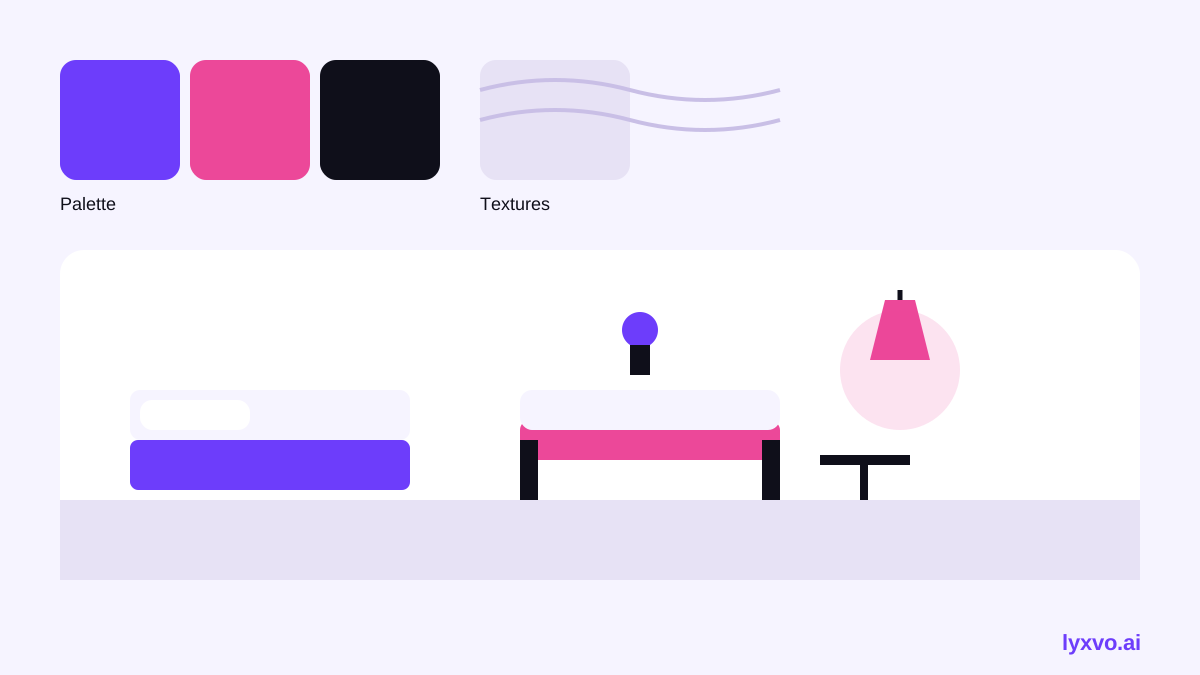
Small rooms look calmer with a limited palette. Pick three colours: one main neutral (warm white, sand or light grey), one supporting tone (wood or muted green), and one accent (terracotta, navy or ochre). Stick to these across textiles, lamps and art, and the room will feel deliberate even when every item was inexpensive.
To test a look before buying, build a moodboard that includes your palette, textures and a few reference images. This makes it easier to spot what does not belong.
Step 4: Use AI to design the layout and moodboard
An AI design tool can turn your measurements and budget into options you can compare. In Lyxvo AI's interior design tool, you can generate room moodboards, 2D floor plans and decor shopping lists, either from scratch or from a photo of your room. The output is a design, not a photorealistic render, which is useful for planning furniture placement and spend.
A practical way to work:
- Describe your studio: size, window position, the zones you need and your budget.
- Ask for two or three layout options, each with a different furniture arrangement.
- Compare the floor plans for walking paths, light and storage.
- Choose the option you like and ask for a decor list with approximate quantities.
- Remove anything that is not essential and move that money to your priority zone.
Tip: Keep your first decor list to items you need to live comfortably. You can add accents later once you know how the room actually feels.
Step 5: Shop from the list in the right order
Buy in this order to avoid wasted money:
- Lighting that plugs in, so the room is usable from day one.
- The largest piece, usually the bed or sofa, because it sets the scale.
- Storage that adds function without taking floor space.
- Textiles such as rugs, curtains and bedding, which change the look cheaply.
- Accents like plants, art and cushions, bought last.
Measure each item against your plan before you check out. A sofa that is 10 cm too long can block a walkway.
Step 6: Keep it renter-friendly
- Use tension rods, adhesive hooks rated for your wall type, and freestanding shelves instead of drilled fixtures.
- Add a rug to define zones without changing the floor.
- Choose plug-in or battery lamps rather than new wiring.
- Check your lease for rules on painting, wall decals and pets before you commit.
- Keep receipts and product details so you can take items with you when you move.
Step 7: Make the most of light and vertical space
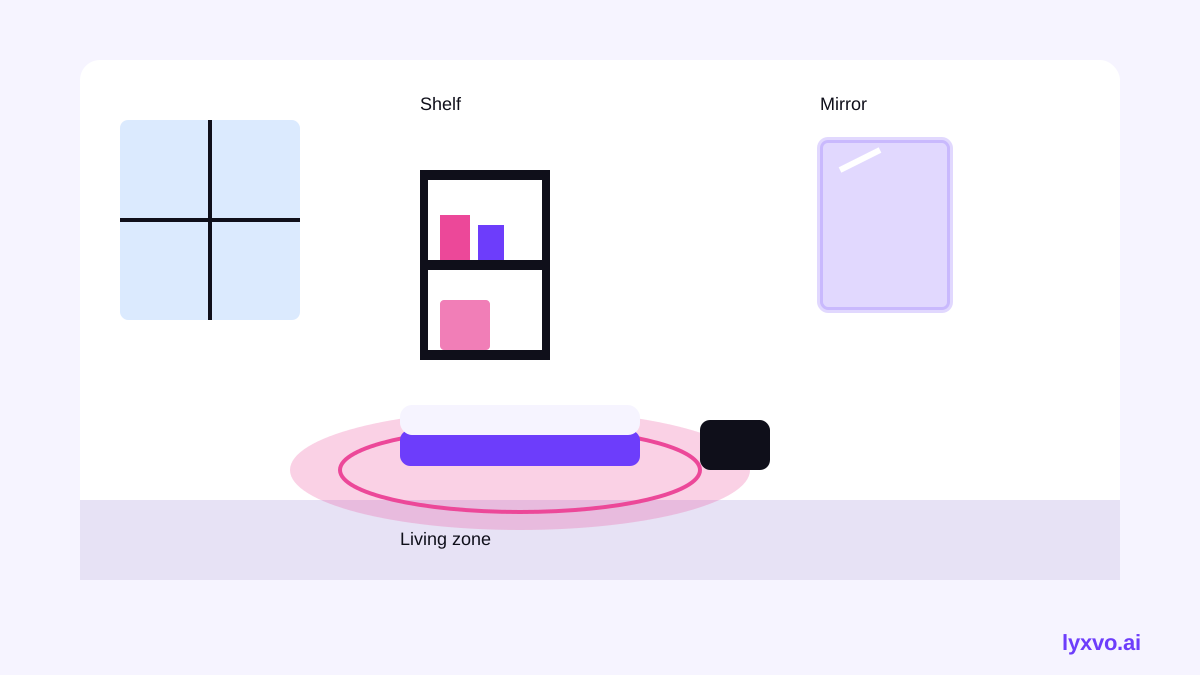
In a studio, light and height are free upgrades. Place mirrors across from windows to bounce daylight. Use tall, narrow bookshelves or wall-mounted rails to store things upward. Layer light with a ceiling fixture, a floor lamp and a desk lamp so the room feels bigger at night.
How to start in Lyxvo AI
To plan your studio in Lyxvo AI, open the AI interior design page and describe your room, or upload a photo. Ask for a 2D floor plan, a moodboard in your chosen palette and a decor shopping list with a budget target. Then use the Canva-style editor to adjust colours and swap items, and save the plan. You can also browse free design templates for layout ideas. Lyxvo Lite is free to start, with a daily limit, and plans are listed on the pricing page.
Common mistakes to avoid
- Buying a large sofa before measuring the walkways.
- Mixing too many colours and patterns in a small room.
- Skipping lighting and relying on one ceiling fixture.
- Buying decor before deciding where the bed and storage go.
- Ignoring lease rules and having to replace fixtures later.
Final checklist
- Measured the room, windows, outlets and door swing
- Split the budget by zone
- Chose a three-colour palette
- Generated two or three layouts and compared them
- Bought lighting and the largest piece first
- Kept every change removable and lease-friendly
A well-planned studio does not need a large budget. It needs clear zones, a few good pieces and a palette that repeats. Start with a plan, buy from the list, and add personality over time.
Try it in Lyxvo AI
Describe it in your own words and the design agent starts on the right flow. Free to start.
Related tool: AI interior design for any room