Room Makeover Ideas From a Photo of Your Bedroom

A room makeover from a photo of your bedroom is one of the easiest ways to see what a change could look like before you buy anything. Take a clear picture, note what works and what doesn't, and use those observations to shape a plan you can actually carry out.
Start with a clear photo and an honest inventory
The quality of your makeover depends on the photo you start from. Stand in the doorway, shoot in daylight if you can, and capture the whole room, including the wall opposite the bed. Take a second shot from the corner to show depth.
Then list what you see:
- Fixed elements: windows, doors, closet, radiator or air unit, light switches
- Large pieces: bed, wardrobe, dresser, desk, rug
- Things you'd keep: a favorite lamp, artwork, a color you like
- Things that bother you: clutter, harsh overhead light, a dark corner, the cable mess behind the TV
This inventory becomes your brief. A makeover that respects what cannot move is much more practical than one that ignores the room's real constraints.
Decide on one main direction
Bedrooms work best when they have one clear mood. Pick a direction before you pick individual items:
- Calm and minimal: neutral walls, natural textures, few objects, soft warm lighting
- Warm and cozy: earthy tones, layered textiles, a statement rug, lamps at bed height
- Bold and personal: one accent wall, deeper colors, art or plants as the focal point
- Light and airy: pale palette, sheer curtains, mirrors to bounce daylight
You don't need to commit to every detail yet. Choose the mood, then test it on the photo.
Makeover ideas that work in most bedrooms
Layout
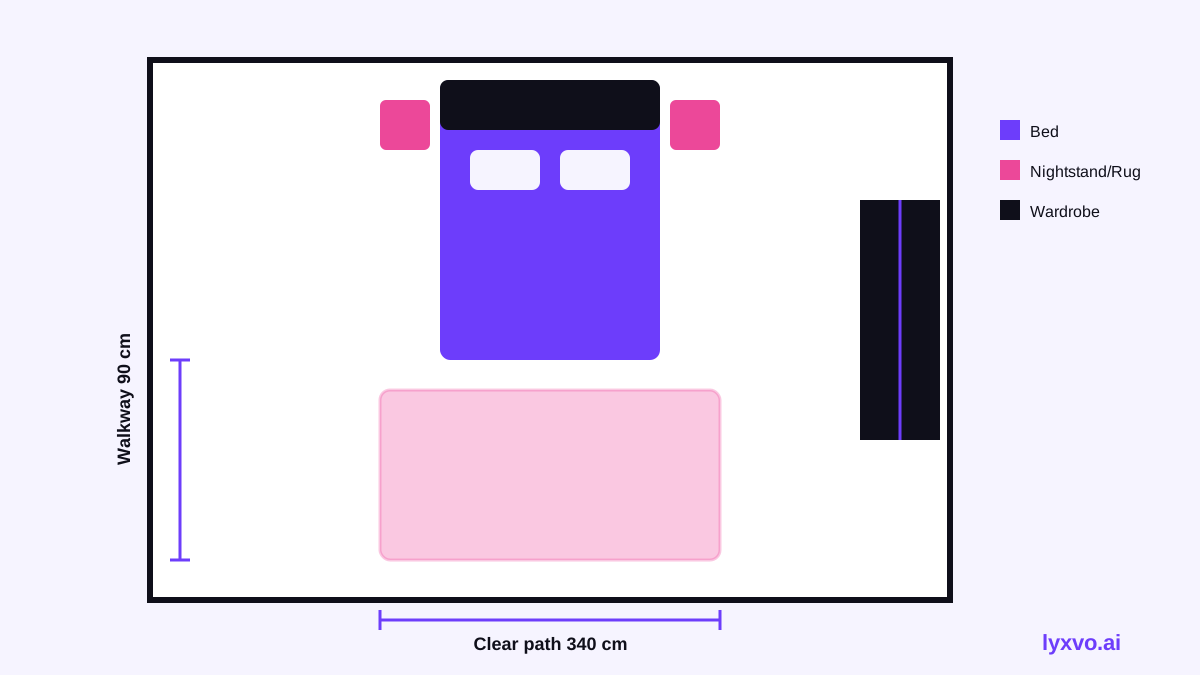
Move the bed first, because it sets the room's logic. Common arrangements that often feel better:
- Bed centered on the longest wall, with space on both sides for nightstands
- Bed placed away from the door line, so you're not exposed when someone enters
- A clear 60 to 90 cm path around the bed for walking and making it
- Furniture grouped by function: sleep, dress, work, relax
Color
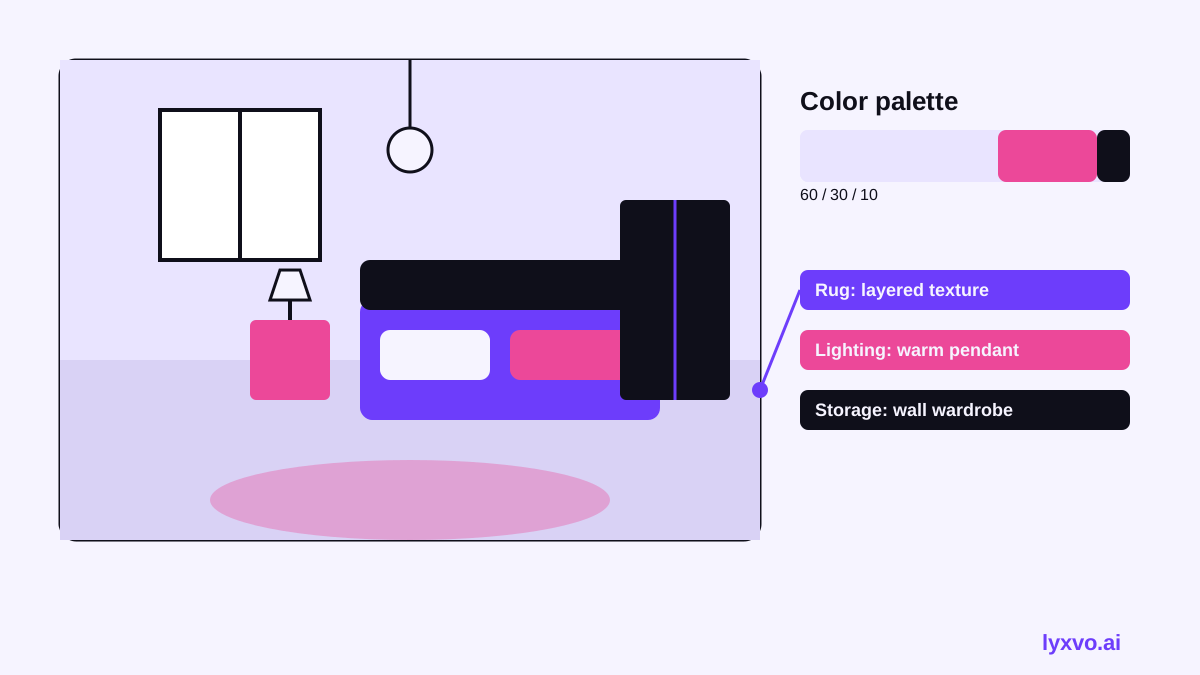
Use the 60-30-10 idea: about 60 percent dominant wall or base color, 30 percent secondary (bedding, curtains, big furniture), and 10 percent accent (cushions, art, lamp shades). This keeps the room balanced without feeling busy.
Lighting
Lighting changes a room more than most buyers expect. Layer it:
- Ambient: ceiling or wall light, dimmable
- Task: a reading lamp at each side of the bed
- Accent: a small lamp or LED strip behind a headboard or shelf
Warm white bulbs usually feel more restful in bedrooms than cool white.
Textiles and rugs
A rug that sits under the front legs of the bed anchors the space. Add two or three textures: linen, knit, wood, or a soft wool throw. Textures add warmth without adding color.
Storage and clutter
If the photo shows surfaces covered in objects, plan closed storage first: a basket, a low cabinet, or wardrobe organizers. Keep only a few decorative items on open surfaces.
A quick checklist before you buy anything
- [ ] Walkways are clear and the door opens fully
- [ ] The bed is anchored by a rug, not floating in the room
- [ ] Each side of the bed has a light source and a surface
- [ ] The palette follows the 60-30-10 rule
- [ ] At least one natural material is present
- [ ] Clutter has a home: drawer, basket or shelf
- [ ] The shopping list has measurements next to every item
Compare options with a simple table
| Goal | Small change | Bigger change |
|---|---|---|
| Feel calmer | Remove half the surface items, swap to warm bulbs | Repaint in a soft neutral, change bedding |
| Feel bigger | Add a large mirror opposite the window | Move the bed, switch to lighter curtains |
| Feel cozier | Add a textured throw and a rug | New headboard, layered lighting plan |
| Feel more personal | Frame a few favorite prints | One accent wall in a deeper color |
Design your makeover in Lyxvo AI
You can turn your photo and notes into a design plan with Lyxvo AI's interior design tool. Upload the photo of your room, describe the mood you want, and the agent produces design options you can review: a room moodboard, a 2D floor plan, and a decor shopping list. The outputs are designs and plans, not photo renders, so use them to decide placement and purchases.
Once you have a direction, you can make a moodboard or a visual reference in the Lyxvo studio and edit text, colors and images directly in the Canva-style editor. Templates are available in free design templates if you want a starting layout. Lyxvo Lite gives you a daily allowance to start, and pricing lists the plans if you need more.
Mistakes to avoid
- Buying before measuring. A rug or wardrobe that is too big ruins the room. Measure first.
- Using only one light source. A single ceiling light makes any bedroom feel flat.
- Copying a single inspiration photo. Adapt the ideas to your room's windows, doors and daylight.
- Ignoring the photo's angle. Photos can distort proportions. Check your plan against measurements.
Final thoughts
A room makeover from a photo works best when you combine an honest inventory, one clear mood, and a layout built around fixed elements. Start small: fix the lighting and clear the surfaces, then decide whether bigger changes like paint or a new bed are worth it. Trends and product availability change, so check current prices and options before you buy.
Try it in Lyxvo AI
Describe it in your own words and the design agent starts on the right flow. Free to start.
Related tool: Free design templates you can edit in minutes